
Information Analysis
Section A - Common Information Analysis
1. User Reviews and Experience
1. User Reviews and Experience
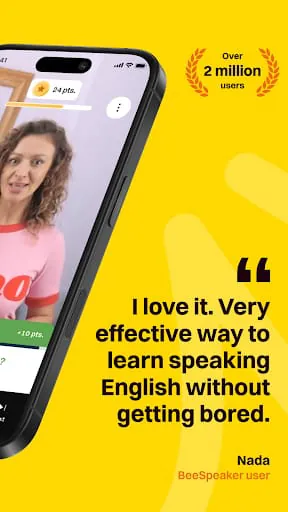
Overall User Satisfaction: User reviews generally indicate a high level of satisfaction, with many appreciating the app's focus on speaking practice and its innovative AI-powered approach. The average rating across platforms is often around 4.7/5 stars.
Common User Feedback: Users frequently praise the app's effectiveness in improving pronunciation and building speaking confidence. The AI tutor and interactive lessons are often highlighted as key strengths.
User Rating Distribution: The app generally receives a high distribution of 5-star ratings, with a smaller percentage of users expressing concerns or lower ratings.
Most Appreciated Features: The AI-powered speech recognition for pronunciation feedback, the interactive conversation practice, and the availability of lessons tailored to different levels (A0-C1) are frequently mentioned as the most appreciated features.
Common Complaints: Some recurring complaints include inconsistencies in speech recognition, repetitive content in certain exercises, and the limited number of languages offered (primarily English and Spanish). The free version is also noted as being restricted, requiring a subscription for full access.
2. Technical Performance
App Size and Requirements: Specific details on app size and system requirements are not prominently featured in reviews, but it is available on Android and iOS.
Battery Consumption: Information on battery consumption is not readily available in user feedback or descriptions.
Loading Speed: The app is generally reported to perform smoothly, with lessons loading fast.
Stability: While most users report a smooth experience, some have noted occasional issues with voice recognition and speech recognition not working correctly.
Offline Capabilities: Offline mode for reviewing saved lessons is mentioned as a feature that supports flexible learning.
3. Updates and Maintenance
Update Frequency: Updates are mentioned as being regular, indicating active development and maintenance.
Bug Fix Response Time: While not explicitly detailed, the developer response to negative reviews sometimes includes offers to help troubleshoot issues, suggesting a level of support.
Developer Support Quality: Developer responses to user feedback are noted, with some indicating a responsive support team.
4. Security and Privacy
Data Collection Practices: Data privacy practices may vary based on usage, region, and age. Data collected can include Identifiers and Usage Data, which may be linked to the user's identity. Diagnostics data may also be collected but not linked to identity.
Privacy Policy Clarity: A privacy policy is available, providing information on data handling practices.
Security Measures: The app is reported to be free from viruses, spyware, and malware, passing comprehensive security scans.
Permission Requirements: Specific permission requirements are not detailed in the general descriptions.
Data Storage Methods: Information on data storage methods is not explicitly provided.
5. Monetization Strategy
Pricing Model: The app operates on a subscription model, offering monthly or yearly plans.
In-app Purchases: Access to all features requires a PRO subscription.
Subscription Options: Monthly or yearly subscription plans are available after a free trial period.
Free vs Paid Features: The free version offers limited courses or features, with a subscription needed for full access to all lessons and features.
Value for Money: While some find the subscription price to be on the higher side, many users feel it offers fair value, especially considering the advanced AI voice technology and focus on speaking practice.
6. Market Position
Competitor Comparison: BeeSpeaker is often compared to apps like Duolingo, Babbel, and Rosetta Stone, distinguishing itself through its strong focus on speaking practice and AI-driven pronunciation feedback.
Market Share: Specific market share data is not available.
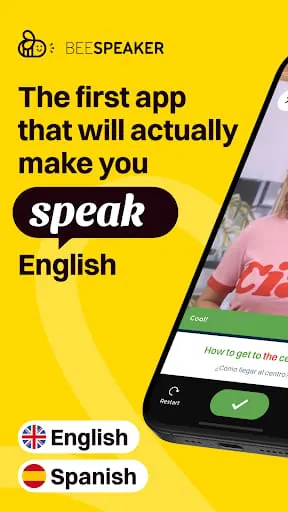
Unique Selling Points: The primary unique selling points are its AI-powered speech recognition for instant pronunciation feedback and its focus on active speaking practice from day one, aiming to overcome the speaking barrier.
Target Audience Fit: The app is well-suited for learners who prioritize improving their speaking fluency and pronunciation, and who may struggle with confidence in real-life conversations. It is less focused on in-depth grammar or writing instruction.
Section B - Category-Specific Analysis
1. Educational Content
Content Accuracy: Content is generally considered accurate, developed with experienced teachers and native speakers.
Curriculum Alignment: Lessons are tailored to different levels, from A0 to C1, suggesting a structured approach to learning progression.
Subject Coverage: Focus is on vocabulary, grammar, pronunciation, and listening skills, with an emphasis on practical conversation.
Age Appropriateness: While not explicitly stated, the A0-C1 levels suggest suitability for a wide range of learners, from beginners to advanced.
Learning Progression: The app progresses from listening and repeating to answering questions and engaging in simple dialogues, aiming for natural language acquisition.
Content Updates: Updates are regular, indicating ongoing development and potential for new content.
2. Learning Methodology
Teaching Approaches: Employs a natural method, focusing on listening and repeating, and practicing real-life conversations, rather than rote memorization of grammar rules.
Interactive Elements: Includes AI-powered conversations, video lessons with teachers, and exercises that require speaking out loud.
Practice Exercises: Features include repeating phrases, answering questions, and engaging in simulated dialogues with AI or native speakers.
Assessment Methods: Real-time feedback on pronunciation, fluency, and rhythm is provided by the AI.
Feedback System: Instant feedback is provided on pronunciation, highlighting errors and areas for improvement.
Adaptive Learning: Lessons are tailored to the user's level and performance, suggesting an adaptive learning approach.
3. Progress Tracking
Learning Analytics: Progress tracking, points, and streaks are used to motivate users and monitor improvement.
Progress Reports: Detailed statistics and progress reports are available to help users monitor their learning milestones.
Performance Metrics: Metrics likely include pronunciation accuracy, fluency, and consistency in practice.
Achievement System: Gamified elements like points, trophies, and streaks contribute to an achievement system.
Parent/Teacher Dashboard: This feature is not mentioned in the available information.
Goal Setting: Users can set goals related to travel, work, or general communication.
4. Engagement Features
Gamification Elements: Points, streaks, trophies, and daily challenges are integrated to make learning fun.
Reward System: Points and achievements serve as a reward system to maintain motivation.
Interactive Exercises: Speaking exercises, AI conversations, and dialogue simulations are key interactive components.
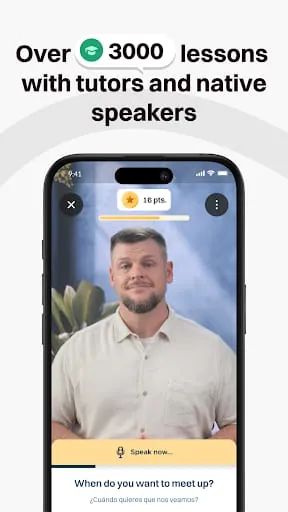
Multimedia Content: Video lessons with teachers and native speakers form the core multimedia content.
Quiz/Test System: While not explicitly detailed as quizzes, the feedback on pronunciation and responses acts as a form of assessment.
Practice Modes: Includes individual practice with AI and potential for practice rooms with other users or native speakers.
5. Customization Options
Difficulty Levels: Lessons are tailored to all levels, from A0 to C1.
Learning Path Options: Users can select lessons based on their goals (travel, work, general communication).
Content Preferences: While not explicitly detailed, the adaptive nature suggests some level of content preference.
Study Schedule: The app allows for flexible scheduling and practice sessions.
Language Options: Primarily supports English and Spanish, with potential for more languages in the future.
Accessibility Features: Specific accessibility features are not detailed in the provided information.
6. Support Features
Offline Learning: Offline mode is available for reviewing saved lessons.
Note-taking Tools: This feature is not mentioned.
Reference Materials: Video lessons and vocabulary exercises serve as reference materials.
Search Function: A search feature for specific phrases is requested by some users.
Help/Tutorial System: A simple onboarding process and clear menus are noted for ease of use.
Technical Support: Responsive technical support is available through channels like email.
Professional Review
Moments of Insight
The BeeSpeaker application offers a profound insight into the evolving landscape of language acquisition. Its core design principle – prioritizing the act of speaking from day one – resonates deeply with the understanding that true fluency is forged through practice, not just passive knowledge. The AI tutor acts as a patient, ever-present guide, a digital confidant that fosters a safe space for experimentation and learning without the anxiety of judgment. This intelligent feedback loop, meticulously analyzing pronunciation and rhythm, creates moments of clarity where users can pinpoint their areas for growth with remarkable precision.
Balanced Perspectives
While BeeSpeaker excels in its dedicated focus on spoken English and Spanish, it's essential to acknowledge its scope. The app's strength lies in its conversational prowess; for those seeking deep dives into complex grammar structures or extensive reading and writing exercises, supplementary resources might be beneficial. The reliance on a subscription model, though common in the ed-tech sphere, means full access is gated, and some users find the cost a consideration. However, the value proposition – unlocking confident speech through advanced AI – is a compelling counterpoint.
Mindful Observations
The design of BeeSpeaker thoughtfully integrates elements that promote digital well-being. The gamified progression with points and streaks encourages consistent engagement without overwhelming the user. Lessons are presented in digestible formats, respecting the user's time and attention span. The absence of overly intrusive notifications and the focus on a clear, uncluttered interface contribute to a serene learning environment, minimizing digital friction and allowing for a more mindful interaction with the learning material.
Thoughtful Reflections
Reflecting on BeeSpeaker’s impact, one sees a harmonious blend of technology and human learning needs. It addresses the common fear of speaking, a significant hurdle for many language learners, by providing a low-stakes environment to practice. The app’s commitment to a natural learning method, mirroring how children acquire language, is a testament to a user-centric approach. This thoughtful design choice promotes a sense of ease and reduces the cognitive load often associated with traditional language study.
Harmonious Integrations
BeeSpeaker seamlessly integrates advanced AI with practical language learning goals. The speech recognition technology is not merely a feature but the core engine driving user confidence and skill development. By providing immediate, actionable feedback, it creates a continuous cycle of practice and refinement. This integration empowers users to not only learn a language but to truly *speak* it, fostering a greater connection between their digital tools and their real-world communication aspirations. The app's performance, consistently smooth across platforms, further solidifies this harmonious integration.