

Information Analysis
Section A - Common Information Analysis
1. User Reviews and Experience
-
Overall User Satisfaction:
Mixed. While many users find the game fun and addictive, citing its engaging gameplay and progression systems, a significant portion expresses frustration with the game's monetization and difficulty curve.
-
Common User Feedback:
Players appreciate the core gameplay loop, the variety of skills and upgrades, and the roguelike elements. However, complaints frequently arise regarding the excessive ads, the perceived "pay-to-win" aspects, and occasional bugs or balancing issues.
-
User Rating Distribution:
App store ratings are generally positive, often around 4.0-4.7 stars, but reviews reveal a polarized audience with strong opinions on both sides.
-
Most Appreciated Features:
The fast-paced combat, the random skill selection that keeps each run unique, and the satisfying progression of upgrading weapons and abilities are frequently highlighted as enjoyable aspects.
-
Common Complaints:
The most prevalent complaints revolve around the aggressive monetization, including mandatory ads and costly in-app purchases. Some users also find the difficulty spikes to be too steep, requiring significant grinding or spending to overcome.
2. Technical Performance
-
App Size and Requirements:
The app size is generally moderate, around 300-400MB, with typical requirements for modern smartphones.
-
Battery Consumption:
Like most graphically intensive games, it can consume a noticeable amount of battery during extended play sessions.
-
Loading Speed:
Loading times appear to be within acceptable ranges for a mobile game.
-
Stability:
While generally stable, some users have reported occasional bugs, such as unregistering hits or issues with energy regeneration.
-
Offline Capabilities:
Information on offline play is not readily available, but many similar games require an internet connection for ads and some progression features.
3. Updates and Maintenance
-
Update Frequency:
The game receives regular updates, including bug fixes, performance optimizations, and the addition of new content like levels and events.
-
Latest Version Changes:
Recent updates have focused on performance optimization, bug fixes, and introducing new levels. One update notably increased the "energy" cost per run, which was met with some player dissatisfaction.
-
Bug Fix Response Time:
Developers appear responsive to fixing bugs, as evidenced by updates that address stability and performance.
-
Developer Support Quality:
Developer responses to reviews are often positive and appreciative, suggesting an engaged support team.
4. Security and Privacy
-
Data Collection Practices:
Privacy policies indicate that some user data may be collected and used for tracking across different apps and websites, while other data may be collected anonymously and not linked to the user's identity.
-
Privacy Policy Clarity:
The clarity of the privacy policy is standard for mobile applications, detailing data usage.
-
Security Measures:
Specific security measures are not detailed, but standard app security practices are assumed.
-
Permission Requirements:
As a mobile game, it likely requests standard permissions for storage, network access, and potentially device information.
-
Data Storage Methods:
User data is likely stored on secure servers, with in-app purchases and progress potentially linked to user accounts.
5. Monetization Strategy
-
Pricing Model:
Free-to-play with significant in-app purchases and optional ads.
-
In-app Purchases:
Offers a wide range of IAPs, including currency packs, lifetime passes, and bundles for faster progression. Some users have noted a "lifetime card" option.
-
Subscription Options:
While not explicitly subscription-based in the traditional sense, there are options like a "lifetime card" and potentially stacked monthly passes, which can add up.
-
Free vs. Paid Features:
Core gameplay is accessible for free, but progression can be significantly slower without in-app purchases or watching numerous ads. Many desirable upgrades and faster progression are locked behind paywalls or extensive ad viewing.
-
Value for Money:
This is highly subjective. Players who enjoy the core loop may find value, but many feel the monetization is aggressive and diminishes the value, especially with the cost of some permanent unlocks.
6. Market Position
-
Competitor Comparison:
Directly compared to games like "Survivor.io" and "Vampire Survivors," sharing similar roguelike shooter mechanics and progression systems. It also draws inspiration from common ad formats ("snake formation ads").
-
Market Share:
Specific market share data is not available, but it has achieved over 1.4 million downloads and generated significant IAP revenue, indicating strong player adoption in its niche.
-
Unique Selling Points:
The cellular/microscopic theme, the adaptation of "snake formation" ad concepts into core gameplay, and a blend of tower defense and roguelike action.
-
Target Audience Fit:
Appears to strongly resonate with players who enjoy fast-paced action, roguelike progression, and strategic skill-building, provided they can tolerate or overlook the monetization model.
Section B - Category-Specific Analysis (Role Playing Games)
1. Character System
-
Character Creation:
Players control an abstract "cell" or "artifact" rather than a customizable character. The focus is on the entity's abilities and upgrades.
-
Class System:
Not a traditional class system, but rather a selection of evolving "medical props" and "skills" that define the player's combat style.
-
Skill Trees:
Features a dynamic skill upgrade system during gameplay where players choose from randomly generated abilities after clearing waves. There's also a persistent upgrade system, sometimes referred to as a "talent tree" or "talent bush," unlocked through progression.
-
Attribute System:
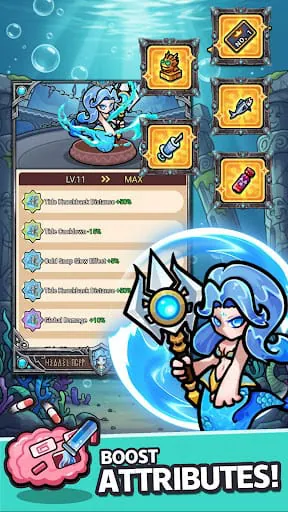
Attributes are enhanced through collected power-ups during gameplay (e.g., fire rate, damage, critical rate) and persistent upgrades that increase overall combat power.
-
Equipment System:
Players upgrade "medical props" and "weapons" which are functionally tied to the skills they acquire.
-
Character Development:
Development is primarily through in-game power-ups and persistent upgrades that increase stats and unlock new abilities over multiple runs.
2. Game World
-
World Design:
The game is set in a microscopic, cellular universe, battling viruses and infections.
-
Quest System:
Primarily revolves around progressing through levels and defeating increasingly challenging virus bosses. Some limited "instances" or challenges might exist.
-
NPC Interaction:
Minimal to none. The focus is on player combat and progression, not narrative interaction.
-
Environment Detail:
Environments are abstract and stylized, representing cellular structures or mazes.
-
World Lore:
Light lore related to defending the cellular kingdom or fighting infections. The narrative is secondary to gameplay.
-
Exploration Features:
Gameplay involves navigating levels, often described as "underground mazes," while battling waves of enemies and bosses.
3. Combat System
-
Battle Mechanics:
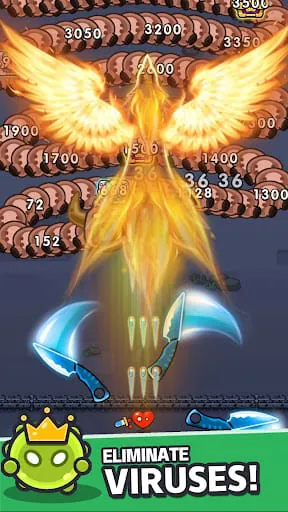
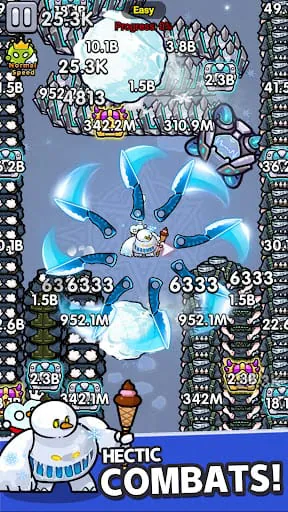
Fast-paced, top-down shooting/defense gameplay. Players move to attack and dodge, while skills and upgrades auto-fire or activate. It shares similarities with "bullet hell" genres due to the sheer volume of projectiles.
-
Skill System:
Core to the combat. Players choose from randomly generated skills during gameplay, leading to diverse builds and strategies each run. Persistent upgrades also enhance skills.
-
Combat Balance:
This is a contentious area. While some find the balance engaging, many players report steep difficulty spikes that require either significant grinding, ad watching, or in-app purchases to overcome.
-
Enemy Variety:
Features diverse virus enemies and distinct boss battles, each with unique attack patterns and weak points.
-
Boss Battles:
A key highlight, with bosses described as puzzles that require precise targeting of weak spots and strategic skill combinations.
-
Party System:
No explicit party system; it's a single-player experience.
4. Progression
-
Level System:
Players progress through chapters and levels, each with increasing difficulty and new enemy types or boss encounters.
-
Experience Gain:
Gained through defeating enemies and completing levels, contributing to in-game power-ups and persistent upgrades.
-
Item Collection:
Collecting power-ups during runs and accumulating resources (like weapon fragments and currency) for permanent upgrades between runs.
-
Crafting System:
Not a traditional crafting system, but rather upgrading existing "medical props" and weapons using collected resources.
-
Achievement System:
Likely includes in-game achievements for milestones and challenges.
-
Side Activities:
May include special challenge modes or "instances" like "roulette" or "golden pig" for extra rewards.
5. Story Elements
-
Main Storyline:
Minimal. The narrative serves as a backdrop for the action, focusing on defending against viral threats.
-
Side Quests:
Limited, primarily centered around completing specific levels or challenges.
-
Character Development:
Refers to the player's evolving build and power through skills and upgrades during a run, rather than character backstory.
-
Dialogue System:
Negligible. Interaction is primarily through UI elements and skill descriptions.
-
Choice Impact:
Skill choices during gameplay have a significant impact on a run's success, shaping the player's strategy and build.
-
Multiple Endings:
No evidence of multiple endings; progression is linear through levels.
6. Technical Features
-
Save System:
Progress is typically saved via account linking (e.g., Google Play Games), allowing for progression across devices.
-
Customization Options:
Primarily focused on build customization through skill selection and weapon upgrades during and between runs.
-
UI Design:
Generally functional, though some users find the abundance of monetization prompts cluttering the main menu.
-
Control Scheme:
Simple touch-and-drag controls for movement, with skills often auto-firing.
-
Performance:
Generally good, with updates focusing on optimization. Some minor bugs have been reported.
-
Load Times:
Acceptable for a mobile game.
Professional Review
Moments of Insight
1. User Reviews and Experience
- Overall User Satisfaction: Mixed. While many users find the game fun and addictive, citing its engaging gameplay and progression systems, a significant portion expresses frustration with the game's monetization and difficulty curve.
- Common User Feedback: Players appreciate the core gameplay loop, the variety of skills and upgrades, and the roguelike elements. However, complaints frequently arise regarding the excessive ads, the perceived "pay-to-win" aspects, and occasional bugs or balancing issues.
- User Rating Distribution: App store ratings are generally positive, often around 4.0-4.7 stars, but reviews reveal a polarized audience with strong opinions on both sides.
- Most Appreciated Features: The fast-paced combat, the random skill selection that keeps each run unique, and the satisfying progression of upgrading weapons and abilities are frequently highlighted as enjoyable aspects.
- Common Complaints: The most prevalent complaints revolve around the aggressive monetization, including mandatory ads and costly in-app purchases. Some users also find the difficulty spikes to be too steep, requiring significant grinding or spending to overcome.
2. Technical Performance
- App Size and Requirements: The app size is generally moderate, around 300-400MB, with typical requirements for modern smartphones.
- Battery Consumption: Like most graphically intensive games, it can consume a noticeable amount of battery during extended play sessions.
- Loading Speed: Loading times appear to be within acceptable ranges for a mobile game.
- Stability: While generally stable, some users have reported occasional bugs, such as unregistering hits or issues with energy regeneration.
- Offline Capabilities: Information on offline play is not readily available, but many similar games require an internet connection for ads and some progression features.
3. Updates and Maintenance
- Update Frequency: The game receives regular updates, including bug fixes, performance optimizations, and the addition of new content like levels and events.
- Latest Version Changes: Recent updates have focused on performance optimization, bug fixes, and introducing new levels. One update notably increased the "energy" cost per run, which was met with some player dissatisfaction.
- Bug Fix Response Time: Developers appear responsive to fixing bugs, as evidenced by updates that address stability and performance.
- Developer Support Quality: Developer responses to reviews are often positive and appreciative, suggesting an engaged support team.
4. Security and Privacy
- Data Collection Practices: Privacy policies indicate that some user data may be collected and used for tracking across different apps and websites, while other data may be collected anonymously and not linked to the user's identity.
- Privacy Policy Clarity: The clarity of the privacy policy is standard for mobile applications, detailing data usage.
- Security Measures: Specific security measures are not detailed, but standard app security practices are assumed.
- Permission Requirements: As a mobile game, it likely requests standard permissions for storage, network access, and potentially device information.
- Data Storage Methods: User data is likely stored on secure servers, with in-app purchases and progress potentially linked to user accounts.
5. Monetization Strategy
- Pricing Model: Free-to-play with significant in-app purchases and optional ads.
- In-app Purchases: Offers a wide range of IAPs, including currency packs, lifetime passes, and bundles for faster progression. Some users have noted a "lifetime card" option.
- Subscription Options: While not explicitly subscription-based in the traditional sense, there are options like a "lifetime card" and potentially stacked monthly passes, which can add up.
- Free vs. Paid Features: Core gameplay is accessible for free, but progression can be significantly slower without in-app purchases or watching numerous ads. Many desirable upgrades and faster progression are locked behind paywalls or extensive ad viewing.
- Value for Money: This is highly subjective. Players who enjoy the core loop may find value, but many feel the monetization is aggressive and diminishes the value, especially with the cost of some permanent unlocks.
6. Market Position
- Competitor Comparison: Directly compared to games like "Survivor.io" and "Vampire Survivors," sharing similar roguelike shooter mechanics and progression systems. It also draws inspiration from common ad formats ("snake formation ads").
- Market Share: Specific market share data is not available, but it has achieved over 1.4 million downloads and generated significant IAP revenue, indicating strong player adoption in its niche.
- Unique Selling Points: The cellular/microscopic theme, the adaptation of "snake formation" ad concepts into core gameplay, and a blend of tower defense and roguelike action.
- Target Audience Fit: Appears to strongly resonate with players who enjoy fast-paced action, roguelike progression, and strategic skill-building, provided they can tolerate or overlook the monetization model.
Section B - Category-Specific Analysis (Role Playing Games)
1. Character System
-
Character Creation:
Players control an abstract "cell" or "artifact" rather than a customizable character. The focus is on the entity's abilities and upgrades.
-
Class System:
Not a traditional class system, but rather a selection of evolving "medical props" and "skills" that define the player's combat style.
-
Skill Trees:
Features a dynamic skill upgrade system during gameplay where players choose from randomly generated abilities after clearing waves. There's also a persistent upgrade system, sometimes referred to as a "talent tree" or "talent bush," unlocked through progression.
-
Attribute System:
Attributes are enhanced through collected power-ups during gameplay (e.g., fire rate, damage, critical rate) and persistent upgrades that increase overall combat power.
-
Equipment System:
Players upgrade "medical props" and "weapons" which are functionally tied to the skills they acquire.
-
Character Development:
Development is primarily through in-game power-ups and persistent upgrades that increase stats and unlock new abilities over multiple runs.
2. Game World
-
World Design:
The game is set in a microscopic, cellular universe, battling viruses and infections.
-
Quest System:
Primarily revolves around progressing through levels and defeating increasingly challenging virus bosses. Some limited "instances" or challenges might exist.
-
NPC Interaction:
Minimal to none. The focus is on player combat and progression, not narrative interaction.
-
Environment Detail:
Environments are abstract and stylized, representing cellular structures or mazes.
-
World Lore:
Light lore related to defending the cellular kingdom or fighting infections. The narrative is secondary to gameplay.
-
Exploration Features:
Gameplay involves navigating levels, often described as "underground mazes," while battling waves of enemies and bosses.
3. Combat System
-
Battle Mechanics:
Fast-paced, top-down shooting/defense gameplay. Players move to attack and dodge, while skills and upgrades auto-fire or activate. It shares similarities with "bullet hell" genres due to the sheer volume of projectiles.
-
Skill System:
Core to the combat. Players choose from randomly generated skills during gameplay, leading to diverse builds and strategies each run. Persistent upgrades also enhance skills.
-
Combat Balance:
This is a contentious area. While some find the balance engaging, many players report steep difficulty spikes that require either significant grinding, ad watching, or in-app purchases to overcome.
-
Enemy Variety:
Features diverse virus enemies and distinct boss battles, each with unique attack patterns and weak points.
-
Boss Battles:
A key highlight, with bosses described as puzzles that require precise targeting of weak spots and strategic skill combinations.
-
Party System:
No explicit party system; it's a single-player experience.
4. Progression
-
Level System:
Players progress through chapters and levels, each with increasing difficulty and new enemy types or boss encounters.
-
Experience Gain:
Gained through defeating enemies and completing levels, contributing to in-game power-ups and persistent upgrades.
-
Item Collection:
Collecting power-ups during runs and accumulating resources (like weapon fragments and currency) for permanent upgrades between runs.
-
Crafting System:
Not a traditional crafting system, but rather upgrading existing "medical props" and weapons using collected resources.
-
Achievement System:
Likely includes in-game achievements for milestones and challenges.
-
Side Activities:
May include special challenge modes or "instances" like "roulette" or "golden pig" for extra rewards.
5. Story Elements
-
Main Storyline:
Minimal. The narrative serves as a backdrop for the action, focusing on defending against viral threats.
-
Side Quests:
Limited, primarily centered around completing specific levels or challenges.
-
Character Development:
Refers to the player's evolving build and power through skills and upgrades during a run, rather than character backstory.
-
Dialogue System:
Negligible. Interaction is primarily through UI elements and skill descriptions.
-
Choice Impact:
Skill choices during gameplay have a significant impact on a run's success, shaping the player's strategy and build.
-
Multiple Endings:
No evidence of multiple endings; progression is linear through levels.
6. Technical Features
-
Save System:
Progress is typically saved via account linking (e.g., Google Play Games), allowing for progression across devices.
-
Customization Options:
Primarily focused on build customization through skill selection and weapon upgrades during and between runs.
-
UI Design:
Generally functional, though some users find the abundance of monetization prompts cluttering the main menu.
-
Control Scheme:
Simple touch-and-drag controls for movement, with skills often auto-firing.
-
Performance:
Generally good, with updates focusing on optimization. Some minor bugs have been reported.
-
Load Times:
Acceptable for a mobile game.
Professional Review
Moments of Insight
Moments of Insight
Within the frenetic energy of "Cell Survivor," there are quiet moments of strategic contemplation. The roguelike skill selection, a core pillar of its design, offers a compelling narrative of adaptation. Each decision, presented as a choice between three randomly generated enhancements, becomes a miniature act of self-discovery. One might initially lean towards raw offensive power, only to find that a seemingly defensive or utility-based skill creates an unexpected synergy, unlocking a path to victory previously unseen. This mirrors life's own unpredictable journey, where embracing the unexpected can lead to profound growth and resilience.
Balanced Perspectives
The game presents a duality: a deeply engaging, fast-paced action experience contrasted with a sometimes jarring monetization strategy. The core gameplay loop—evading swarms, strategically selecting upgrades, and defeating challenging bosses—is undeniably fun and addictive. However, the frequent prompts for ads and the perceived necessity of in-app purchases for smoother progression can disrupt the immersive flow. For some, this is a necessary trade-off for a free-to-play experience; for others, it feels like an obstacle to the pure enjoyment of the game.
Mindful Observations
"Cell Survivor" fosters a unique form of digital well-being through its emphasis on reactive decision-making and adaptive strategy. The constant need to assess incoming threats and choose the most beneficial skill upgrade in real-time sharpens focus. The game doesn't demand prolonged, unbroken sessions but rather offers bursts of intense engagement that can be easily paused and resumed, fitting into the ebb and flow of daily routines. This flexibility, coupled with the satisfaction of mastering complex boss patterns, can be a source of mindful accomplishment.
Thoughtful Reflections
The game's minimalist aesthetic and its focus on abstract biological entities create a surprisingly serene atmosphere amidst the chaos. The act of guiding a single "cell" or "artifact" through a microscopic battlefield, imbued with purpose, can feel meditative. It encourages players to find harmony between action and strategy, understanding that survival is not just about aggressive offense, but also about precise evasion and the wise selection of tools for the task. This balance between chaos and order is a reflection of nature itself.
Harmonious Integrations
The integration of the roguelike elements with a persistent upgrade system creates a satisfying long-term engagement loop. Each failed run, while perhaps frustrating, contributes to a stronger character for the next attempt, fostering a sense of continuous improvement. The game doesn't punish players for not winning immediately but instead guides them towards strategic refinement. This thoughtful design ensures that even in defeat, there is a path towards eventual mastery, promoting a healthy relationship with challenge and progress.