
Information Analysis
Section A - Common Information Analysis
1. User Reviews and Experience
1. User Reviews and Experience
Overall User Satisfaction: User reviews indicate a generally high level of satisfaction, with many praising the game's cozy atmosphere, creative freedom, and social aspects. The game is frequently described as a delightful escape and a refreshing change of pace from more competitive games.
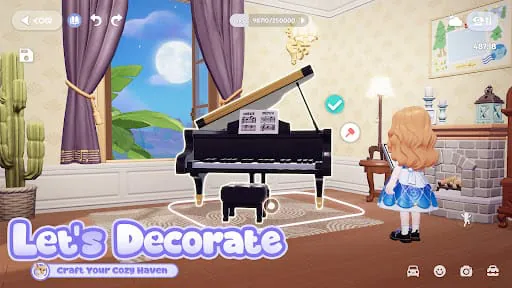
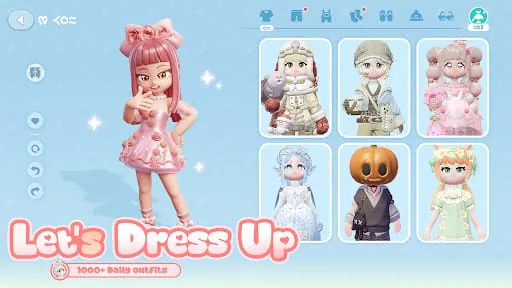
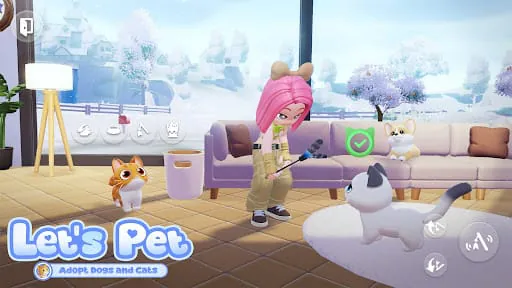
Common User Feedback: Users appreciate the extensive customization options for avatars and homes, the variety of hobbies available, and the game's focus on relaxation and creativity. The social interaction features, such as visiting friends' homes and co-building, are also frequently highlighted as positive aspects.
User Rating Distribution: The game generally holds a high rating, often around 4.5 to 4.8 stars across platforms.
Most Appreciated Features: Extensive character and home customization, a wide range of hobbies (fishing, gardening, cooking, birdwatching, etc.), the social multiplayer aspect, and the generally relaxed, non-punitive gameplay loop are most appreciated.
Common Complaints: Some users find the tutorial to be overwhelming or boring while also containing too much information. There are also mentions of clunky controls, especially on PC where they are a port from mobile, and some find certain mechanics like fishing to be lacking in challenge. The gacha system and the perceived "pay-to-win" or "pay-to-progress" aspects are also a point of contention for some players. Additionally, performance issues like lag and device overheating on high settings, particularly on mobile, have been reported.
2. Technical Performance
App Size and Requirements: The APK size is listed as 3.92 GB, and it requires Android 7.0+ or iOS 12.0+. The PC version has a minimum storage requirement of 10 GB.
Battery Consumption: While the game is visually appealing, playing on high graphics settings can lead to devices getting "toasty" and potentially impact battery life, suggesting a moderate to high battery consumption.
Loading Speed: Loading times are generally optimized, ensuring seamless transitions between areas.
Stability: Most of the time, the game runs smoothly. However, some users have reported lag, stuttering, and even crashes, particularly on mobile devices or when visiting crowded areas. Optimization guides exist to mitigate these issues.
Offline Capabilities: The game is primarily designed as a multiplayer experience, and thus, robust offline capabilities are not extensively detailed. However, the core gameplay loop of hobbies and customization can likely be enjoyed to some extent offline, though social features would be unavailable.
3. Updates and Maintenance
Update Frequency: Regular updates are released, adding new seasonal content, clothing collections, and special events to keep the game dynamic. The latest version is 0.4.5, updated on January 6, 2026.
Latest Version Changes: Version 0.4.5 introduced the "Polar Hymn" update, featuring new outfits, furniture sets, and an exhibition event.
Bug Fix Response Time: Specific information on bug fix response times is not readily available, but the frequency of updates suggests ongoing maintenance and development.
Developer Support Quality: Developer XD Entertainment Co., Ltd. appears to be actively engaged with the game's development and updates.
4. Security and Privacy
Data Collection Practices: Data collected may include Identifiers, Usage Data, Diagnostics, and User Content. Some data may be linked to your identity, while other data (Usage Data, Diagnostics) may not be.
Privacy Policy Clarity: A privacy policy is available, detailing data collection and usage.
Security Measures: The developers state they implement appropriate technical and organizational security measures, but acknowledge no internet transmission is 100% secure.
Permission Requirements: Standard mobile app permissions are likely required for full functionality.
Data Storage Methods: Specific methods are not detailed, but data is subject to the developer's privacy policy.
5. Monetization Strategy
Pricing Model: The game is free-to-play with in-app purchases.
In-app Purchases: Options include currency packs like "Heart Diamond" and membership tiers.
Subscription Options: While not explicitly detailed as subscriptions, "GAMG Formal Membership" and "GAMG Junior Membership" are listed as in-app purchases.
Free vs Paid Features: Core gameplay, customization, and hobbies are largely accessible for free. However, premium currency and gacha systems offer exclusive outfits and furniture, which some perceive as necessary for optimal progression or aesthetics.
Value for Money: User opinions vary. Some feel the free content is generous, while others find the gacha mechanics and some paywalled features detract from the value, especially if they feel progression is significantly slowed without spending.
6. Market Position
Competitor Comparison: Heartopia is often compared to games like Animal Crossing and The Sims, aiming to capture a similar cozy, creative, and social life-simulation experience on mobile and PC.
Market Share: Upon launch, Heartopia achieved significant success, topping download charts in over 50 countries.
Unique Selling Points: Its blend of extensive customization, diverse hobbies, strong social features, and a focus on relaxation and creative expression without excessive pressure or combat are key differentiators.
Target Audience Fit: The game strongly appeals to players seeking a relaxing, creative, and social gaming experience, particularly those who enjoy life simulation and sandbox-style games.
Section B - Category-Specific Analysis
1. Simulation Depth
Realism Level: The game focuses on a stylized, cozy realism rather than strict adherence to real-world physics or complex simulations. It prioritizes emotional resonance and aesthetic appeal.
Physics System: Not a focus; the game emphasizes aesthetic and interactive elements over complex physics simulations.
AI Behavior: NPCs are designed to be charming and offer quests and interactions, contributing to the social atmosphere. Their behavior supports the narrative and gameplay loop.
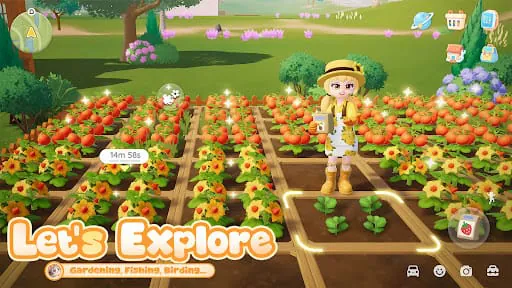
Environment Interaction: Players can interact with various elements in the environment for hobbies like fishing, gardening, and resource gathering. The world is designed to be explored and utilized for these activities.
Resource Management: While not a core survival simulation, players manage resources for crafting, cooking, and home decoration. This is integrated with hobbies and quests.
System Complexity: The game balances depth with accessibility. Hobbies and crafting systems offer layers of engagement without becoming overly complex for casual players. The interdependence of hobbies adds strategic depth.
2. Game Features
Scenario Variety: The game offers a variety of activities including fishing, gardening, cooking, birdwatching, bug catching, decorating, and social events, providing diverse scenarios.
Customization Options: Extensive options for character appearance (outfits, hairstyles, etc.) and home decoration are a major feature.
Tutorial System: The tutorial guides players through core mechanics, though some find it information-heavy or slow.
Challenge Modes: The game is designed to be low-pressure and lacks traditional challenge modes; the focus is on relaxation and personal progression.
Sandbox Mode: The game functions as a large sandbox where players are free to pursue various hobbies and activities at their own pace.
Mission System: A robust quest system, including daily, weekly, and main story quests, guides progression and rewards players with currency and unlocks.
3. Management Tools
Resource Overview: Players can manage gathered materials for crafting and cooking. Inventory and crafting menus provide overviews.
Statistics Tracking: Hobby progression and DG levels are tracked, indicating player advancement.
Planning Tools: While not explicit planning tools, the quest log and hobby system encourage players to strategize their daily activities for efficient progression.
Control Systems: Primarily touch-based controls on mobile, with mouse and keyboard on PC. Some users find these controls clunky or not fully optimized.
Automation Options: No explicit automation options are detailed, but the game's structure allows for relaxed, repetitive tasks that can become routine.
Decision Impact: Decisions in dialogue and actions influence relationships with NPCs and progression through the story and DG levels. Crafting and decorating offer creative choices with visual impact.
4. Technical Performance
Graphics Quality: The game features vibrant, soft lighting, and an art style described as a hybrid of The Sims and Animal Crossing, aiming for AAA visual quality.
Animation Smoothness: Generally smooth, but performance can degrade on lower-end devices or in crowded areas, leading to stuttering. Optimization settings can help.
Load Times: Optimized for seamless transitions.
System Requirements: Recommended specs for PC include 8-16 GB RAM and GPUs like GTX 1060 or RX 480. Mobile requires Android 7.0+ or iOS 12.0+.
Save System: Cross-save functionality is available between PC and mobile platforms via the same account.
Performance Stability: Generally stable, but can experience lag or crashes in certain conditions, especially on mobile devices with high graphics settings.
5. User Interface
Control Scheme: Touch controls on mobile; mouse and keyboard on PC. Some users find the controls imperfectly translated from mobile to PC.
Information Display: Clean and aesthetically pleasing UI with various menus for quests, collections, crafting, and profiles.
Menu Navigation: Generally easy to navigate, though some menus can be extensive due to the game's features.
Camera Controls: Manual camera adjustment is required, which some find frustrating.
Tool Selection: Tools for hobbies like fishing and gardening are integrated into the gameplay loop.
Help System: Tutorials and in-game quest guidance assist players.
6. Progress System
Achievement System: Achievements are not explicitly detailed but implied through collection mechanics and progression systems.
Unlock Mechanics: New features, hobbies, furniture, and story content are unlocked by increasing the Developer Grade (DG) level, which is achieved by completing quests.
Scenario Progress: Main story quests guide progression through the game's narrative and unlock features.
Skill Development: Hobbies function as skill development, with players leveling them up to unlock new recipes, abilities, and rewards.
Rating System: Player ratings are generally high on app stores. In-game, DG level and hobby proficiency serve as progression metrics.
Performance Metrics: Progression is measured by DG level, hobby proficiency, collection completion, and decorative achievements within the player's home and town.