Part 1 - Information Analysis
Section A - Common Information Analysis
1. User Reviews and Experience
-
Overall User Satisfaction:
Users generally find Jigsolitaire to be a fun and relaxing puzzle game with a satisfying core mechanic. Many appreciate the blend of jigsaw and solitaire elements, the smooth gameplay, and the calming atmosphere.
-
Common User Feedback:
The most frequent positive feedback revolves around the engaging gameplay, the satisfying "snap" of cards fitting together, and the variety of images. The primary negative feedback centers on the excessive and intrusive nature of advertisements, the lack of an option to remove ads, and the in-game coins having no apparent purpose.
-
User Rating Distribution:
Jigsolitaire holds a high average rating, often around 4.6 to 4.8 stars across platforms, based on tens of thousands of reviews. However, a significant portion of reviews express frustration with ads, leading to lower individual ratings from some users.
-
Most Appreciated Features:
The innovative fusion of jigsaw and solitaire mechanics, the intuitive swipe controls, the satisfying chain reactions, and the wide variety of themed photos are frequently praised. The lack of timers and pressure also contributes to its appeal for a relaxing experience.
-
Common Complaints:
The most significant complaint is the overwhelming number of full-screen video ads that interrupt gameplay, often lasting longer than the puzzles themselves. Users also frequently mention the lack of an option to purchase an ad-free version, the in-game coins being useless, and sometimes repetitive or unappealing puzzle art.
2. Technical Performance
-
App Size and Requirements:
The app size is around 170-180 MB. It requires iOS 13.0 or later for Apple devices and Android 7.0+ for Android devices.
-
Battery Consumption:
Specific data on battery consumption is not readily available, but typical puzzle games of this nature are not excessively battery-draining unless played for extended periods.
-
Loading Speed:
Loading speeds are generally reported as fast, with the game running smoothly on various devices.
-
Stability:
The app is generally stable, with updates often focused on improving performance and stability by upgrading internal libraries.
-
Offline Capabilities:
Information regarding offline capabilities is not explicitly detailed, but puzzle games often function offline, though some features like daily challenges or ad delivery might require an internet connection.
3. Updates and Maintenance
-
Update Frequency:
Updates are released periodically, often including internal library updates, bug fixes, and sometimes new levels.
-
Latest Version Changes:
Recent updates have focused on internal library upgrades for better performance and stability, as well as resolving minor, rare issues.
-
Bug Fix Response Time:
Specific details on bug fix response times are not provided, but the release of updates addressing minor issues suggests ongoing maintenance.
-
Developer Support Quality:
Direct developer support quality is not extensively reviewed, but user feedback often suggests that developers may not be actively reading or responding to all reviews, particularly regarding the ad situation.
4. Security and Privacy
-
Data Collection Practices:
Data collected may include purchases, location, identifiers, and usage data. Some data may be used for tracking across other companies' apps and websites, while other data is not linked to the user's identity.
-
Privacy Policy Clarity:
A privacy policy is available, as is standard for most apps, detailing data practices.
-
Security Measures:
Specific security measures are not detailed publicly, but the app has passed initial safety checks on platforms like APKPure.
-
Permission Requirements:
Standard permissions for mobile apps are expected, likely including access to storage and possibly network access for ads.
-
Data Storage Methods:
Details on data storage methods are not publicly disclosed.
5. Monetization Strategy
-
Pricing Model:
The game is free-to-play.
-
In-app Purchases:
There are no in-app purchases mentioned for unlocking features or content. The primary monetization is through advertisements.
-
Subscription Options:
No subscription options are available.
-
Free vs Paid Features:
All gameplay features are available for free. Monetization relies solely on ad revenue, with no option to pay to remove ads.
-
Value for Money:
While the game is free, the value is significantly impacted by the ad experience. Users who tolerate the ads find good value in the free content, while others feel the ads detract too much from the experience.
6. Market Position
-
Competitor Comparison:
Jigsolitaire competes in the crowded puzzle game market, differentiating itself through its unique blend of jigsaw and solitaire mechanics. It's often compared to other digital jigsaw puzzle apps.
-
Market Share:
Specific market share data is not readily available, but the app has millions of downloads and a large daily active user base, indicating a significant presence in its niche.
-
Unique Selling Points:
The core USP is the innovative fusion of jigsaw puzzles with a solitaire-like card draw mechanic, offering a fresh take on both genres.
-
Target Audience Fit:
The game appeals to players who enjoy relaxing puzzle games, jigsaw enthusiasts, and fans of solitaire, fitting well within the casual gaming demographic.
Section B - Category-Specific Analysis
1. Puzzle Design
-
Puzzle Variety:
Offers a good variety of images across themes like landscapes, animals, and flowers. The core mechanic is consistent, but the images change with each puzzle.
-
Difficulty Progression:
The difficulty generally progresses through level-based challenges, with some users finding early levels easy and later ones more engaging. Updates have added new levels.
-
Solution Complexity:
The complexity arises from identifying the correct placement of cards within the solitaire tableau and then strategically moving them to form the jigsaw image.
-
Logic Requirements:
Requires spatial reasoning to fit puzzle pieces and strategic thinking to manage the card draw and placement from the solitaire tableau.
-
Creative Elements:
The creative element lies in the appealing artwork of the jigsaw puzzles themselves.
-
Tutorial Quality:
The game offers intuitive swipe controls and early levels likely serve as a gentle introduction to the mechanics of moving cards and grouping them.
2. Game Mechanics
-
Control Scheme:
Primarily uses intuitive swipe controls for moving cards. Tapping to select and dragging to move is the core interaction.
-
Physics System:
A subtle physics system is present as connected cards "snap" together and can be moved as a group.
-
Time Management:
Generally, there is no time pressure, allowing players to solve puzzles at their own pace, contributing to its relaxing nature.
-
Score System:
While not explicitly detailed, some feedback suggests scores might be based on completion time or moves made, encouraging replayability for better efficiency.
-
Power-ups:
No specific power-ups are mentioned in the core gameplay.
-
Special Abilities:
The "chain reaction" where multiple cards lock into place simultaneously could be considered a special mechanic that enhances the satisfying feeling of play.
3. Level Structure
-
Level Design:
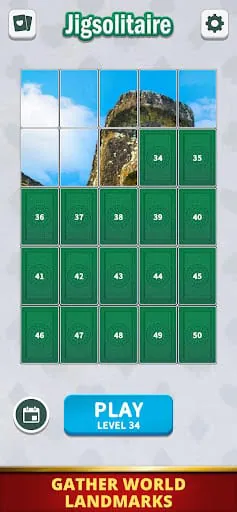
The game features a level-based structure where each level presents a new jigsaw puzzle to complete. There are also "daily challenge" levels.
-
Difficulty Curve:
While generally smooth, some players note that difficulty can increase significantly in later levels or daily challenges.
-
Bonus Challenges:
Daily challenges serve as bonus challenges, offering potentially harder puzzles.
-
Hidden Content:
Completing levels reveals a collection photo, which could be considered a form of hidden content or reward.
-
Star/Rating System:
No explicit star or rating system per level is mentioned, but high scores or efficient play might be implicitly rewarded.
-
Level Variety:
Variety comes from the different images used for each puzzle, covering a wide range of themes.
4. Progress System
-
Achievement System:
Some sources mention achievements and badges as rewards for milestones.
-
Unlock Mechanics:
New levels and puzzles are unlocked as players progress through the game.
-
Daily Challenges:
These provide fresh, often more difficult, puzzles available daily.
-
Leaderboards:
Mentioned in one source in the context of social sharing and competition, though details are scarce.
-
Reward System:
Rewards include unlocking new levels, collection photos, and potentially badges/achievements. The in-game coins earned are currently without purpose.
-
Player Statistics:
Basic statistics like progress through levels and potentially completion times/moves might be tracked.
5. Social Features
-
Friend System:
No explicit friend system is detailed.
-
Score Sharing:
Mentioned as a possibility, allowing players to share results and potentially compete with friends.
-
Multiplayer Modes:
No multiplayer modes are described.
-
Social Challenges:
Leaderboards and score sharing imply a competitive social element.
-
Gift System:
No gift system is mentioned.
-
Community Events:
Daily challenges could be considered a form of community event, as many players participate concurrently.
6. Monetization (Puzzle Game Specific)
-
Level Packs:
Not applicable, as the game offers a continuous progression of levels for free.
-
Hint System:
Hints are available, likely through the use of earned coins or potentially rewarded ads (though not explicitly confirmed).
-
Power-up Store:
No explicit store for power-ups is mentioned.
-
Ad Integration:
Ads are heavily integrated, appearing as banners and full-screen video interstitials, often after every puzzle. This is the primary monetization method.
-
Premium Features:
The core gameplay is free. The only "premium" aspect is the experience of playing without ads, which is not currently offered as a purchaseable option.
-
Subscription Options:
None available.
Part 2 - Professional Review
Moments of Insight
In the digital realm, where constant stimulation often vies for our attention, finding an application that cultivates a sense of calm is a rare treasure. Jigsolitaire, at its core, offers such a haven. The game's premise—a harmonious blend of jigsaw puzzles and solitaire mechanics—immediately suggests a thoughtful design, aiming to engage the mind without overwhelming the senses. Its brilliance lies not in complex mechanics, but in the simple, satisfying click of pieces falling into place. This moment, when a card finds its correct position and locks with a soft, audible snap, is a small but potent reminder of order and accomplishment, providing a brief, meditative pause in a busy day.
Balanced Perspectives
The app's approach to gameplay is commendably accessible, featuring intuitive swipe controls that feel natural and responsive. The absence of timers or pressure allows users to immerse themselves fully, fostering a state of flow often sought in mindful activities. The visual aesthetic, characterized by a variety of curated images, adds to the tranquil experience. However, this serenity is frequently disrupted by an aggressive advertising model. While monetization is a necessity, the frequency and length of the advertisements often detract significantly from the intended relaxing experience, creating a jarring imbalance. The current ad strategy, while potentially effective for revenue, risks alienating the very users who seek peace and focus within the app.
Mindful Observations
Jigsolitaire successfully simplifies the user's routine by offering a focused, single-purpose experience. It doesn't demand complex navigation or learning curves. Instead, it invites users to engage in a familiar, comforting activity. The game's design choices, such as the clean interface and the gentle audio cues, enhance its role as a digital tool for digital well-being. It’s an invitation to step away from the demands of productivity and engage in an activity purely for the pleasure of solving and creating. The act of piecing together an image, even digitally, can be a grounding experience, promoting a sense of presence.
Thoughtful Reflections
The developers have created an experience that, at its heart, encourages a healthy relationship with technology—one where a device can be a source of gentle engagement rather than a constant demand. The game’s pacing allows for short, restorative breaks or longer periods of focused relaxation. However, the aggressive ad implementation raises questions about the long-term digital wellness it promotes. Is the constant interruption truly conducive to peace of mind, or does it merely mask it with fleeting moments of puzzle-solving? A more balanced approach to monetization could truly unlock the app's potential as a champion of digital mindfulness.
Harmonious Integrations
Jigsolitaire integrates the art of puzzle-solving seamlessly into the user's day. It’s an app that can be picked up and put down without a second thought, fitting into the small pockets of time often lost to aimless scrolling. The core loop is inherently rewarding, providing a sense of accomplishment with each completed image. The potential for this app to truly harmonize with user needs lies in refining its monetization strategy. By reducing ad intrusiveness or offering a sustainable ad-free option, Jigsolitaire could elevate itself from a merely enjoyable pastime to a truly restorative digital companion, fostering a more peaceful and balanced engagement with technology.
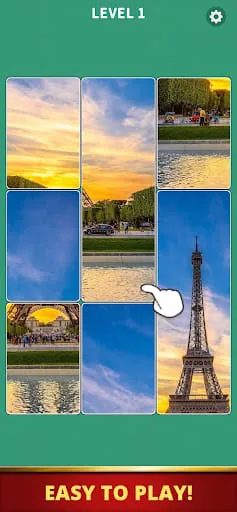
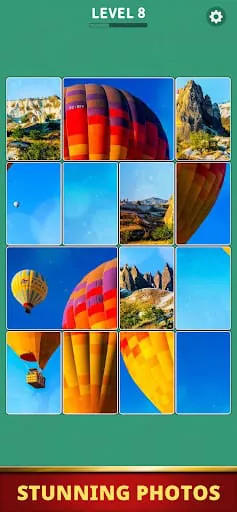
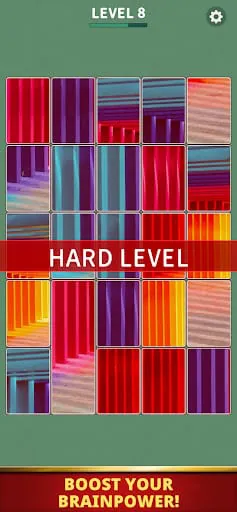
"Jigsolitaire" presents a refreshingly simple yet deeply engaging puzzle experience, centered around the satisfying mechanic of combining photographic cards to form complete images. The core gameplay loop is immediately accessible, inviting players to sort through what might initially appear as a chaotic arrangement of fragments. The true joy, however, lies in the discovery and the tactile sensation of finding the precise alignment where two cards seamlessly interlock. This "satisfying snap" is a recurring motif that underscores the game's appeal, offering a tangible reward for careful observation and spatial reasoning. The design philosophy clearly prioritizes this sense of accomplishment, ensuring that even the most seemingly random pieces find their destined place, leading to a fulfilling resolution of each puzzle. This focus on intuitive placement and visual completion makes "Jigsolitaire" a standout title in the puzzle genre, promising a delightful journey for anyone who appreciates the elegance of a well-executed puzzle.
The game's control scheme is exceptionally well-implemented, further enhancing its accessibility and smooth gameplay. The intuitive swipe controls allow for effortless manipulation of individual cards, enabling players to quickly rearrange and test potential placements. A particularly innovative feature is the ability to move connected cards as a cohesive unit once they have been correctly joined. This mechanic not only streamlines the assembly process, especially in later stages with larger assembled sections, but also introduces an interesting strategic layer. The game cleverly mitigates potential frustration by allowing players to manage assembled groups, preventing the need to reposition each individual card repeatedly. This thoughtful design choice contributes significantly to the game's fluid pace and overall enjoyable user experience, making it easy to get lost in the satisfying progression of completing each picture.
Beyond its core mechanics, "Jigsolitaire" is designed with broad appeal in mind, catering to a wide spectrum of players and offering substantial replayability. The game's difficulty is thoughtfully scaled, making it approachable for casual players seeking a brief distraction while also providing enough depth to captivate those looking for a more involved challenge. The introduction of "exhilarating chain reactions," where multiple cards lock into place simultaneously, adds a thrilling element of emergent gameplay that can be incredibly rewarding. Furthermore, the commitment to continuously expanding the game with a "wide variety of themed photos"—ranging from natural landscapes and flora to fauna—ensures fresh content and diverse visual experiences. The strategic element of "caution when overlapping large and small cards," which introduces a size-altering mechanic, adds another layer of complexity for advanced players. Ultimately, "Jigsolitaire" successfully blends simple interaction with strategic depth, making it a compelling and endlessly engaging puzzle adventure suitable for all.